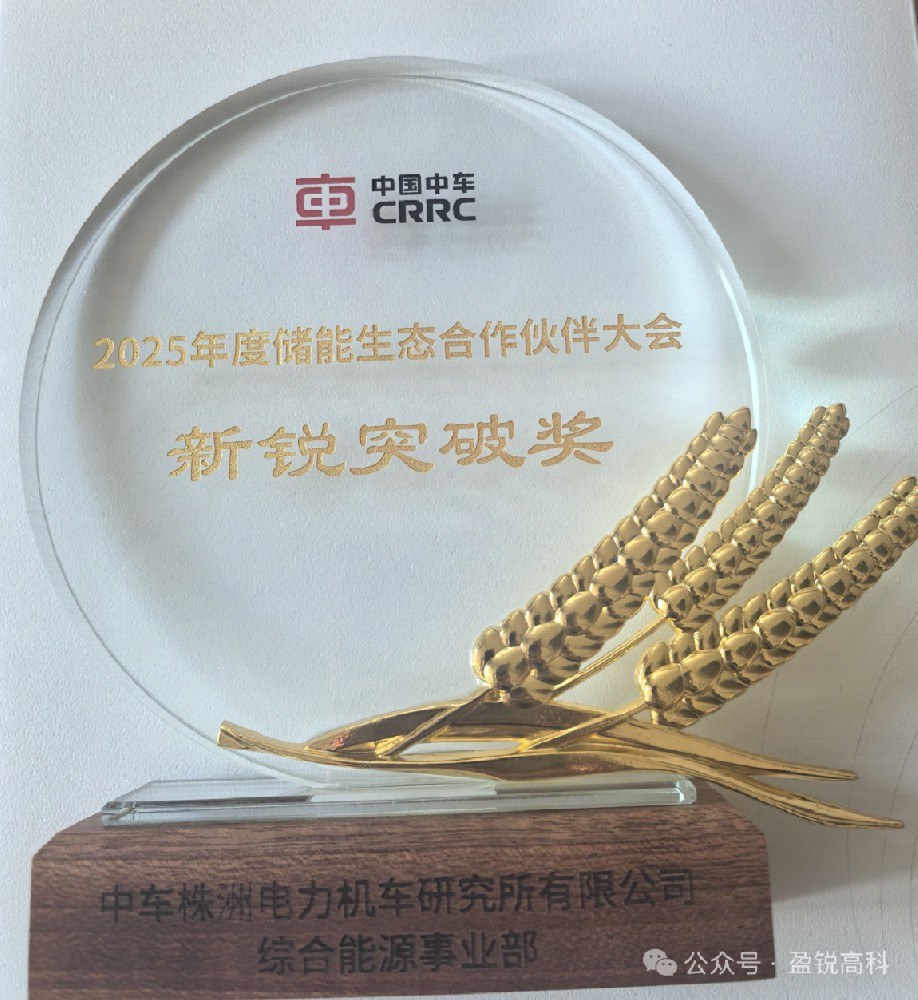
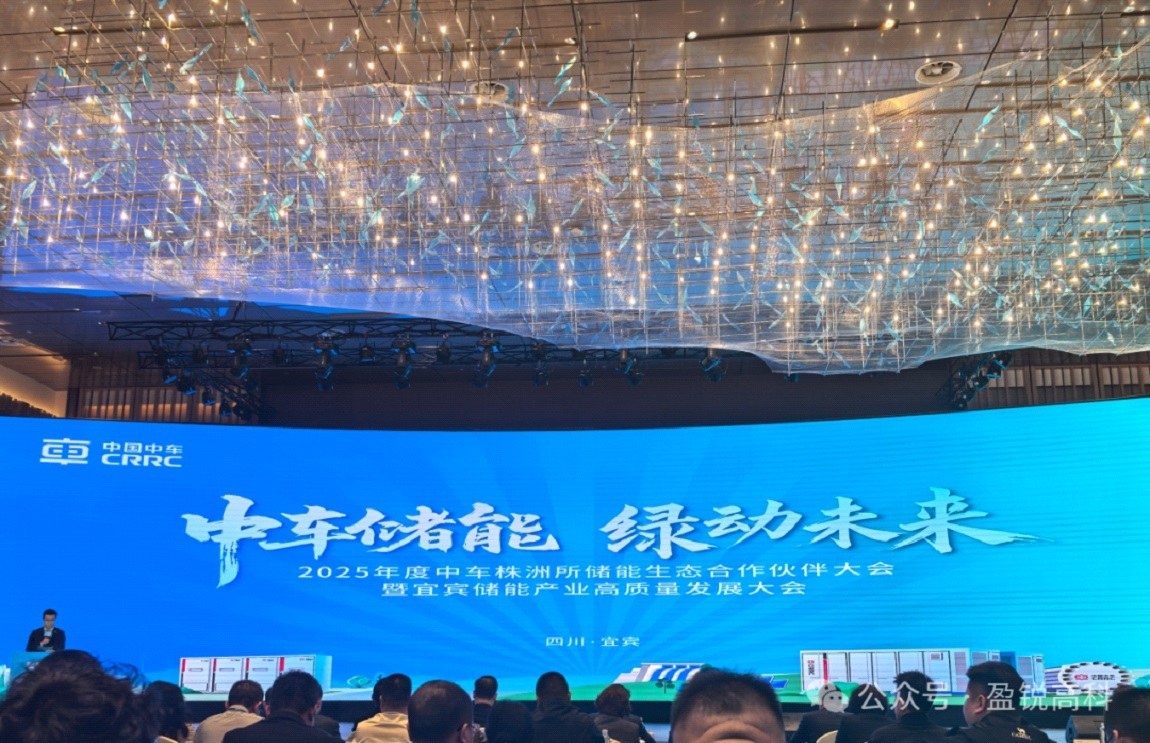
On 8 April, CRRC Zhuzhou Locomotive & Rolling Stock Institute Co., Ltd. (CRRC Zhuzhou Institute) held its 2025 Energy Storage Ecosystem Partners Conference in Yibin, Sichuan. Centred on the coordinated development of the full 'wind, solar, storage, hydrogen and charging' chain, the conference drew more than 500 supply-chain companies and industry experts. At the event, Hefei Yingrui High-Tech New Materials Technology Co., Ltd. won the 'Emerging Breakthrough Award' from CRRC Zhuzhou Institute on the strength of its technological innovations in hydrogen catalyst materials, and the two sides announced they would deepen cooperation in hydrogen and jointly advance the industrialisation of green-hydrogen technology.
Conference focus: building a new energy-storage ecosystem
CRRC Zhuzhou Institute continues to build out its energy-storage business. At its 2024 commercial & industrial energy-storage ecosystem partners conference it released a 'platform + product + channel' integrated service system to drive collaborative industry-chain innovation. This conference further upgraded the cooperation model, focusing on the integrated development path of hydrogen technology and energy-storage systems. Tang Yuanyuan, General Manager of the Integrated Energy Business Division of CRRC Zhuzhou Institute, noted that Yibin — an important base for CRRC's energy-storage industry with planned annual capacity of 6 GWh — will serve as a key carrier for hydrogen-technology R&D and project implementation.
YR High-Tech's award: innovation in hydrogen catalyst materials
The 'Emerging Breakthrough Award' YR High-Tech received is an award CRRC Zhuzhou Institute established for upstream materials companies in the chain, recognising their innovation in key hydrogen materials.
YR High-Tech independently developed high-stability catalytic ceramic composite materials and electrodes. Using high-temperature reactive-sintered ceramic material as the active component and metal-nickel-coated heterojunction catalyst spray material, it completes electrode fabrication on a nickel-mesh substrate via plasma spraying; the product's cyclic start-stop life reaches 5,000 cycles, improving on the shortcomings of traditional electrodes in cavitation resistance, reverse-current resistance and potential-corrosion resistance.